Water testing is most useful when the test matches the source and the question you want answered. A private well and water delivered by a public or shared system are different sampling contexts. I’m Steve Bossard, owner and inspector at Basements & Above. I help homeowners and buyers consider what to test, how a sample should be handled, and what a laboratory result can—and cannot—say about water at that time.
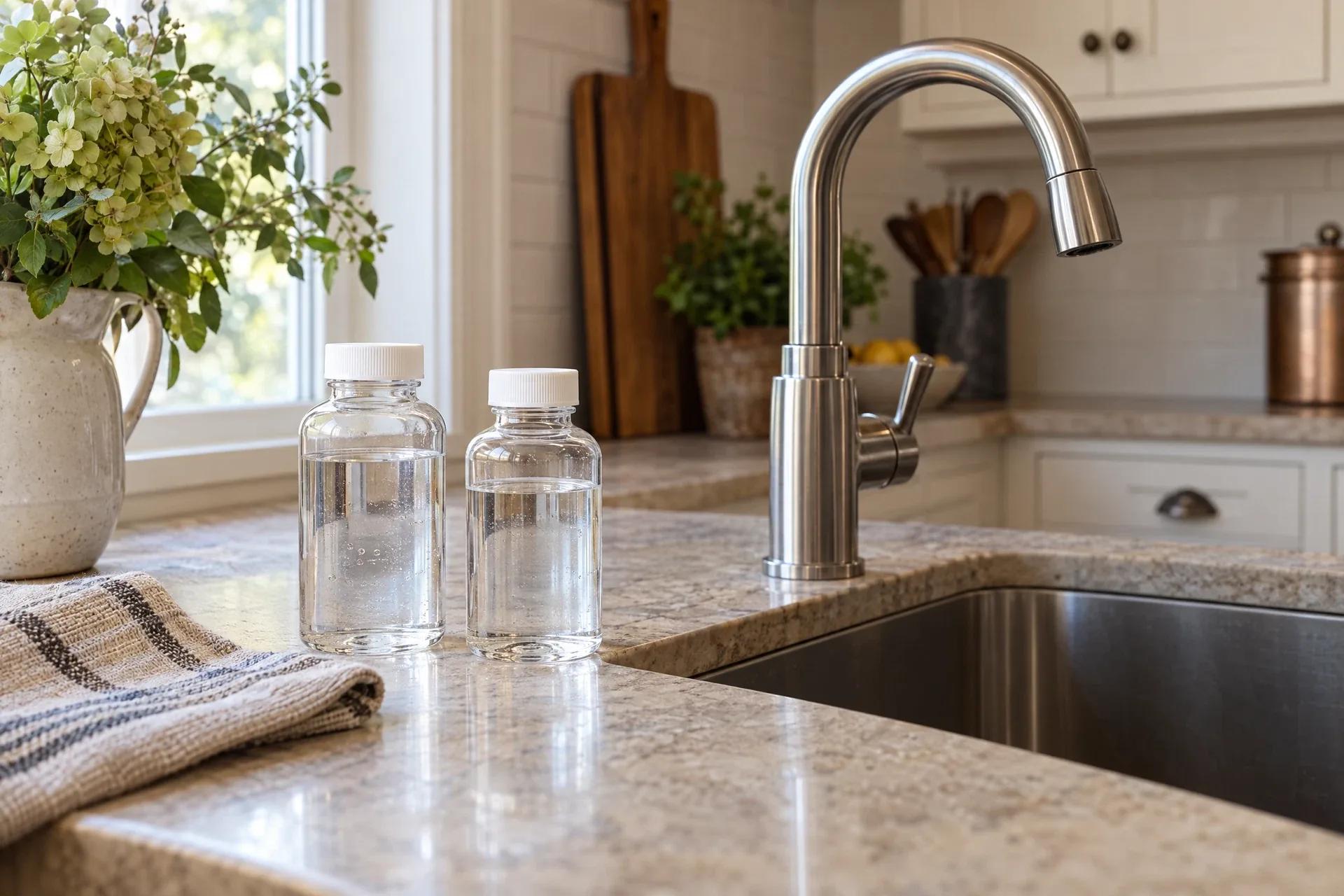
Illustrative water sampling bottles beside a residential kitchen tap.
Start with the source
Well and supplied water may call for different questions and sampling plans.
Follow handling directions
Collection, containers, timing and delivery can affect whether a sample is useful.
Read results in context
A laboratory report applies to its analytes and sample conditions, not every future use.
Begin with the water source
First identify whether the home uses a private well, public supply, or another arrangement, and where you plan to sample. Water from a well before treatment differs from a tap after equipment. For supplied water, a question about household plumbing or a filter may not be answered by information about the supplying system. Tell me what prompted testing—a purchase, changed appearance, recent work, or a treatment question. That context helps frame a request, but does not establish a contaminant is present. Ask the lab or relevant authority about a suitable sampling point.
Choose analytes for a reason
A test measures only analytes included in the order and only in the submitted sample. Depending on the source and concern, someone may ask about bacteria, metals, nitrate, or other chemical characteristics. Those are examples, not a standard package or a claim of local presence. Ask which analytes are included, what the lab can report, and whether its analysis suits your question. Requirements may differ by test. A selected analysis does not screen for everything, and one tap may not represent another. For standards or health interpretation, consult the appropriate authority or qualified professional.
Follow sample instructions
Collection is part of the test. Use the container specified for that analysis and follow the laboratory’s directions for the tap, flushing or stagnation, treatment equipment, preservation, temperature, and delivery. Requirements vary, so do not assume directions for one analysis work for another. Avoid touching the inside of a prepared bottle or transferring water unless instructed. Coordinate collection with the lab’s delivery window: some analyses have short holding times, and delay or poor storage can affect acceptance or interpretation. Ask the lab or me before sampling if timing or the collection point is unclear.
Read results in context
Read the report’s sample identification, date, analytes, units, and method notes together. It describes the submitted sample under recorded conditions; it does not guarantee conditions at every tap or later. An analyte not ordered—or not reported—should not be treated as proven absent. I do not promise a particular result or replace advice from a water or health authority. If a finding prompts concern, confirm what was measured and whether the sample met requirements. Ask the lab or appropriate authority whether clarification, repeat sampling, or further evaluation is warranted.
Consider timing and follow-up
A result describes a sample at a point in time, not a permanent condition. Changes to a well, plumbing, treatment equipment, source, or use may prompt an owner to ask about new testing. A buyer should understand scope and sample instructions early enough to plan. I do not promise turnaround; confirm scheduling and delivery details with the laboratory. Keep the report with its sample date, location, source description, and treatment information. If a result is unexpected, check its units and method before drawing conclusions. The right next step depends on the question and evidence.
Prepare access and records
Before an appointment, tell me whether the home uses a well or supplied water, identify relevant taps, and note filters or treatment equipment. Make the intended tap accessible and share prior reports or lab instructions that may affect the plan. For a purchase, testing is one source of information alongside the inspection and available records; it does not establish concealed plumbing conditions or resolve every question about a water system. Keep the request, sample details, and report together. Direct technical or health questions to the responsible lab or authority.
Before we take a closer look
Questions worth asking.
Should well and supplied water be tested the same way?
Not necessarily. Source and sampling point affect which questions matter. Tell me the source and reason for testing, then confirm analytes and collection instructions with the laboratory or relevant authority.
Can one test show that all water is safe?
No. A report covers only ordered analytes and the submitted sample under recorded conditions. It cannot guarantee every substance, tap, future condition, or health outcome. Seek qualified interpretation for your situation.
What if a result concerns me?
Check the analyte, units, method, location, date, and notes, then ask the lab or appropriate authority about interpretation and follow-up. Do not make a treatment or health decision from an isolated number.
The right scope for your home
Some questions
go a little deeper.
Different services answer different questions. Choose the investigation around the property—not the other way around.
Your next step
Start with your property’s questions.
If you are considering water testing for a home in my service area, tell me the source and the question you want answered. I’ll help you discuss a practical scope and sample plan.