Syracuse homes reflect many eras of building and many rounds of ownership. A house may pair older materials with later additions, replacement systems, or repairs that deserve a closer look; another may be comparatively straightforward. When I inspect, I consider how the visible parts of this particular property fit together, not what its age or neighborhood supposedly predicts. My goal is to give you a clear account of observed conditions, useful priorities, and sensible questions to discuss before you decide what comes next.
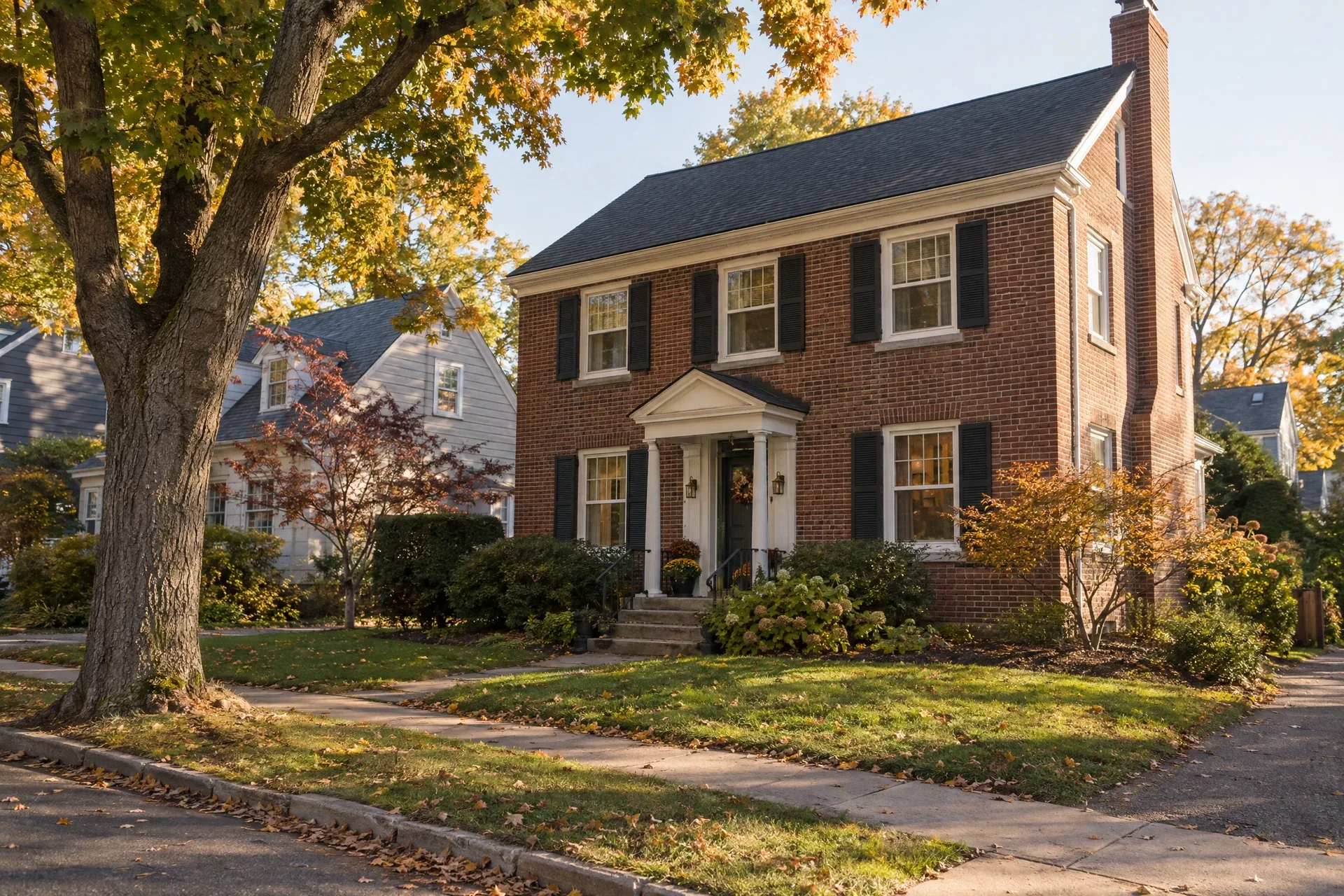
Representative brick Colonial home on a leafy Northeastern residential street.
Perspective
Age is context, not a diagnosis of condition.
Scope
I explain visible findings and access limits.
Next steps
Findings frame follow-up questions and maintenance priorities.
Read the layers, not just the age
Syracuse homes span eras; one property may combine old construction, additions, remodeling, and replacement systems. Age is context, not a verdict. I look at visible transitions, materials, movement, moisture, and signs of repair, describing what can be observed rather than guessing how or when work was done.
Have disclosures, invoices, permits, or prior repair notes available. They frame questions but do not prove every component was updated. When visible evidence leaves an important question open, records or a qualified specialist may provide a fuller answer.
Roof, exterior, and water management
I review accessible roof and exterior surfaces for wear, displaced materials, flashing concerns, and conditions meriting follow-up. Weather exposure alone does not prove a roof has failed. An inspection records visible conditions that day; it cannot predict service life or performance.
I consider grading, gutters, downspouts, and runoff near the foundation. Staining has several possible explanations; a dry visit cannot rule out intermittent entry. Ask about recurring seepage, timing, and prior work; that history can guide whether maintenance or targeted evaluation is the sensible next question.
Basements, foundations, and drainage clues
Basements and foundations may show clues about moisture, repairs, and upkeep. My excavation and foundation background informs my questions; this is a visual, noninvasive review of accessible areas. I note observable cracking, displacement, staining, or dampness in context; a crack alone does not establish cause or structural significance.
Clear access to basement and crawlspace areas where possible, and tell me about known leaks or seasonal changes. Belongings and coverings can restrict observation. If a condition needs engineering or other specialized assessment, the report can identify the question to take to a qualified professional, not prescribe a repair design.
Repairs and building systems in context
Visible electrical, plumbing, heating, cooling, and ventilation components are part of the inspection. Staged updates may leave systems of different ages or configurations. I report accessible observations, not a destructive investigation, complete code review, or permit verification. Blocked or unsafe-to-operate equipment can limit what I can assess.
Share service history, especially if a problem returned after repair. My digital report explains observed concerns and separates further evaluation from maintenance. I do not decide whether you should buy, sell, negotiate, or accept a repair; those decisions are yours and your advisers’, informed by your priorities and any additional evaluations.
Make access and questions count
Arrange access to the attic, basement, utility areas, and systems you want inspected; move personal items where practical. Tell me about a past roof leak, drainage work, persistent odor, or unusual system behavior. That context helps focus attention, but concealed defects remain outside visual assessment.
Ask what an observation means and what it does not establish. Photos and plain explanations connect findings to observed locations. I can explain why further evaluation may help, without claiming an unseen cause or exact repair cost.
A report for decisions, not predictions
The report describes visible, accessible conditions at a point in time; it is not pass-or-fail, a warranty, or defect-free assurance. Concealed, intermittent, or later-changing conditions may not be apparent. A recent renovation and an older finish each leave questions that only property-specific observation can address.
Use findings with seller information, specialist opinions, and your goals. The report organizes concerns, priorities, and maintenance considerations, not a complete repair plan. You and your advisers make the decisions.
Before we take a closer look
Questions worth asking.
Does an older Syracuse house automatically need more repairs?
No. Age alone establishes no condition. I consider visible materials, alterations, maintenance, and access. Records or a specialist may answer questions; I do not infer hidden problems from age or location.
Can the inspection tell me whether the basement will leak?
I report visible moisture and drainage that day. A visual inspection cannot predict every season, rule out intermittent entry, or determine concealed causes. Share any known history.
What should I have ready before the appointment?
Arrange access to relevant spaces, clear items where practical, and gather repair records. List concerns and recurring issues. Records inform questions but do not verify every repair.
The right scope for your home
Local knowledge.
A closer look.
Different services answer different questions. Choose the investigation around the property—not the other way around.
Your next step
Let’s talk about your home.
If you are considering a Syracuse-area home, tell me your main questions. I’m Steve Bossard, and I’ll help you understand what is visible and what may deserve a closer look.