A thermal image can make surface-temperature differences easier to notice, but it is not a picture of what lies behind a wall. I use thermal imaging as a supplementary investigative tool, alongside visible observation, when conditions make it useful. A pattern is a clue, not a diagnosis. In Central New York, seasonal changes and heating conditions make context essential to interpreting what appears.
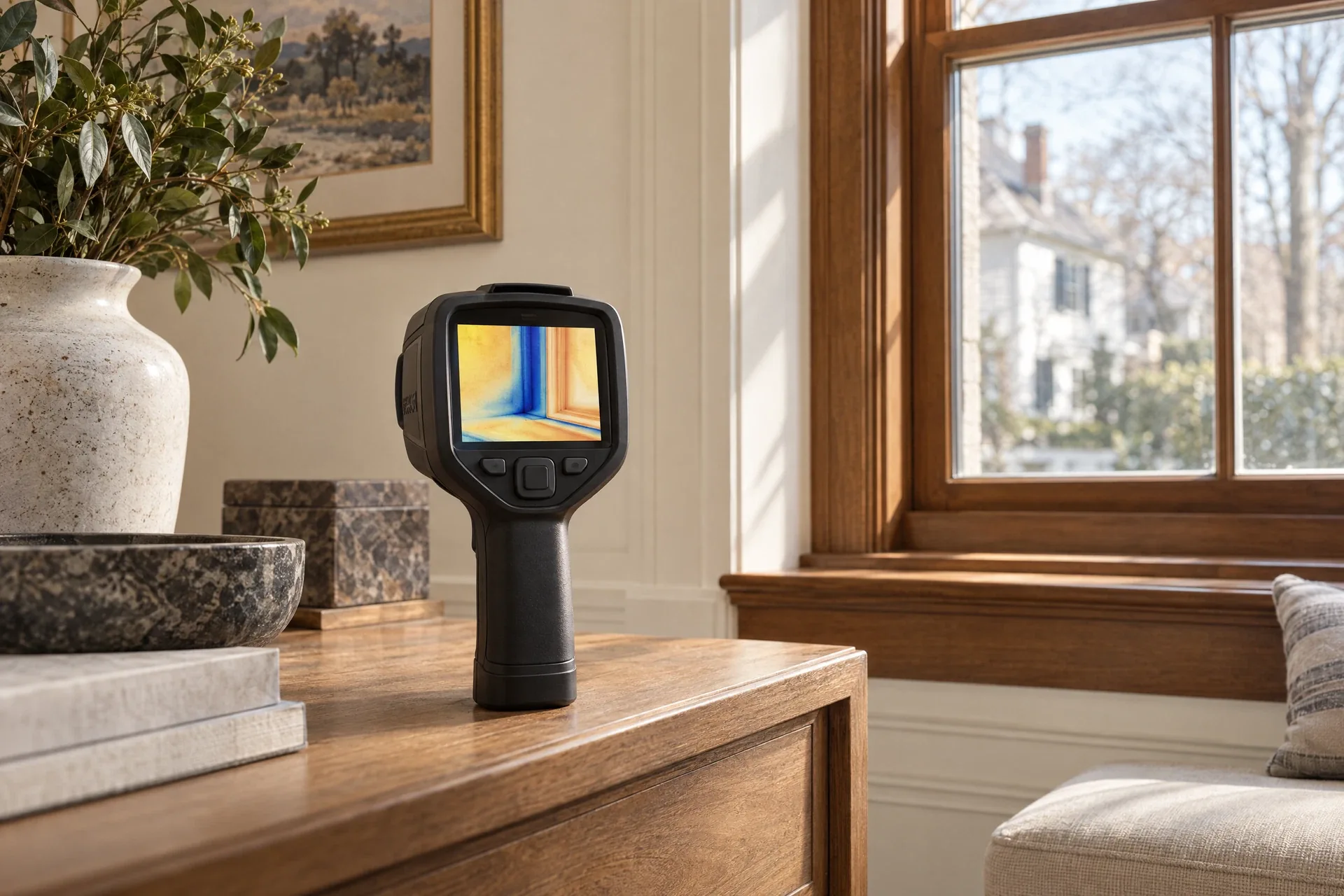
Illustrative infrared camera beside a household window.
Patterns, not pictures through walls
Imaging represents surface temperatures; it does not reveal hidden construction directly.
Context comes first
Weather, heating, materials, and recent changes can all influence what appears.
Part of a broader inspection
I compare useful patterns with visible conditions and explain when more evaluation may help.
What a thermal image can contribute
Thermal imaging displays differences in surface temperature. A pattern may draw my attention to an area of a ceiling, wall, window, or floor for closer observation. It adds information to what I can see from accessible locations; it does not replace visual inspection of the component or surroundings.
Several explanations may fit one contrast: air movement, a heating register, framing, sunlight, plumbing, or a material change. I consider visible clues and building use before describing it. The useful question is whether the pattern matters in context and suggests a sensible next step—not simply what color it appears.
Conditions shape what appears
An image records one moment. Outdoor temperature, wind, sun, indoor heating or cooling, open windows, and building materials can influence surface temperatures. Reflective finishes may also mislead. A pattern may be less distinct or look different under other conditions, so it is not a timeless picture of a home's performance.
In Central New York, a cold day and a mild season can present different inspection conditions. I consider how the home was being used rather than treating a season as proof of a defect. If conditions limit interpretation, I will explain that; an image without context can be misleading.
From an indication to a useful question
When a pattern merits attention, I compare it with visible surfaces and accessible surroundings. Staining, a draft, a nearby fixture, or a change in finish may add context. If I cannot establish a cause during a visual, non-invasive inspection, I will say so rather than claim certainty the image cannot support.
The outcome may be an ordinary explanation, a suggestion to monitor, or a recommendation for specialist evaluation. Different questions call for appropriate follow-up methods, potentially including direct examination or testing. Not every color contrast needs more investigation; I explain what is observed and why a next step may help.
Preparing the home and allowing access
Keep normal household settings; you do not need to stage the house or create artificial temperature differences. Tell me if a window was open, a room is rarely heated, or a system was recently adjusted. That history can help me interpret an observation. Unusual thermostat changes do not make results conclusive.
Clear access to relevant rooms and visible areas helps. I do not move stored belongings, dismantle finishes, or open concealed cavities as part of a standard visual inspection. If you have a concern, point out the location and describe when it occurs; that can focus attention without substituting an image for investigation.
Important boundaries of the method
Thermal imaging measures surface-temperature patterns; it does not see through walls, identify concealed materials, or confirm hidden wiring or plumbing conditions. A contrast alone cannot establish a leak, insulation gap, or specific defect. It cannot identify the nature of concealed growth or damaged materials. Moisture concerns may warrant separate evaluation using methods suited to that question.
Not every problem creates a detectable pattern, and not every pattern signals a problem. Access, surfaces, and conditions all matter. I do not present imaging as a guarantee that hidden defects have been found or ruled out, or as a replacement for specialist testing. It is supplementary to the agreed inspection scope.
Using findings after the inspection
If imaging contributes to an observation, I explain its location and visible context in my digital report, with full-color photos and plain explanations of concerns, priorities, maintenance, or possible further evaluation. Read it alongside other findings; a thermal image should not be isolated from the room and inspection conditions.
For a purchase, discuss questions and options with your real-estate professional or an appropriate specialist. Owners can use an observation to decide what to monitor or whom to consult. I clarify what I observed and could not determine; buyers and sellers make their own decisions with their advisers.
Before we take a closer look
Questions worth asking.
Can thermal imaging show what is behind a wall?
No. It shows surface-temperature patterns, not a view through materials. A pattern may guide observation, but cannot establish what is inside a concealed space.
Does a warm or cool patch prove a leak?
No. Temperature differences have multiple explanations and do not diagnose leaks or identify every hidden defect. A concern may call for separate evaluation using suitable methods.
Should I change the thermostat before the inspection?
Keep normal settings and tell me about unusual heating, cooling, or open windows. Artificial temperature changes do not guarantee a clearer or conclusive result.
The right scope for your home
Some questions
go a little deeper.
Different services answer different questions. Choose the investigation around the property—not the other way around.
Your next step
Start with your property’s questions.
Tell me what you have noticed, and I’ll explain whether imaging may add context—and what it can and cannot tell you.