A radon reading is most useful when you know how and where it was collected. I provide professional radon measurement in the Central New York and Finger Lakes communities I serve, including Cortland, Ithaca, Syracuse, Auburn, Tully, and Dryden. I record relevant test conditions and placement, then explain what the result represents, what it cannot tell you, and when a follow-up measurement may make sense.
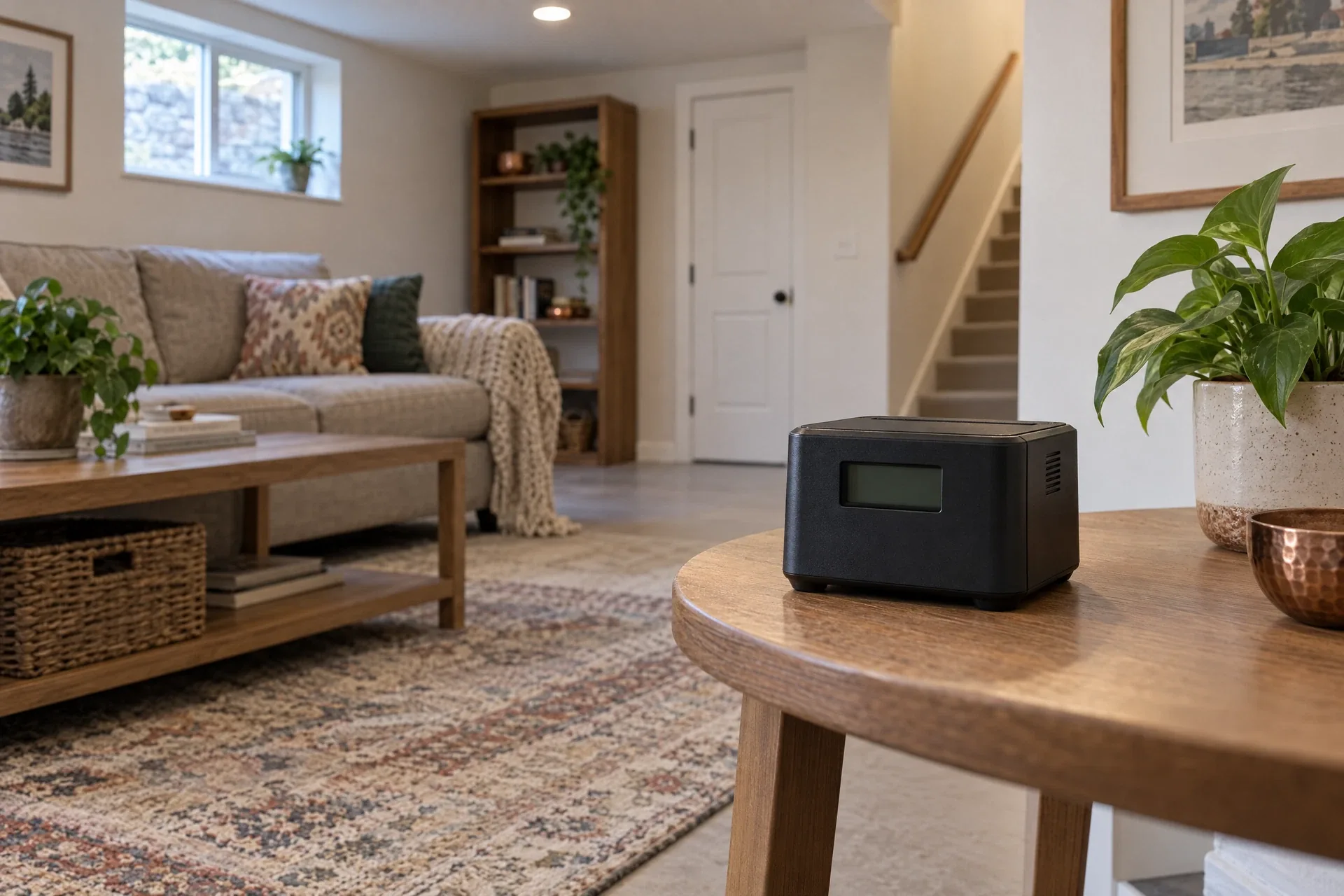
Illustrative radon measurement instrument in a quiet residential room.
Professional measurement
I am an NRPP Radon Measurement Professional, credential #110513-RMP.
Documented context
Placement and relevant conditions help put the reading in perspective.
Clear next steps
I explain the snapshot and help identify useful follow-up questions.
What a radon measurement can tell you
Radon cannot be assessed by sight or smell; a reading comes from measurement. It estimates the concentration in air at the device location during the test period. That is useful information about a particular place and time, not a rating of every room or future condition.
I hold NRPP Radon Measurement Professional credential #110513-RMP. I report the measurement with its conditions, but do not diagnose health effects or promise that a home will remain at one level. A basement reading is not a whole-building guarantee.
A short-term test is a snapshot
A short-term measurement answers a focused question about a defined period. It can inform a buyer, owner, or seller about that window, but is not a permanent rating for the house. Season, ventilation, and building use may differ later.
If a result prompts concern or leaves a question unanswered, consider whether a retest or longer measurement is appropriate. Follow-up depends on your purpose and circumstances. I can clarify what was measured and help you frame useful questions; current public-health guidance and a qualified mitigation professional can inform decisions beyond the measurement itself.
Preparing the home and choosing a location
Before testing, tell me about access limits, unusual operating conditions, recent changes, or timing constraints. Make the agreed area accessible and let household members know not to move, cover, or disturb the device. Coordinating around showings or work can help avoid interruptions.
Placement matters: a reading represents air around the device, not an average of the building. I select a location appropriate to the protocol and test purpose. If a requested area is unsuitable or inaccessible, I will discuss that limitation. Share room-specific questions early.
Conditions are part of the record
A result without context is easy to overread. I document device location, measurement period, and relevant conditions that describe how the test was conducted. Access, room use, or unusual changes may matter. Recording them does not eliminate natural variation.
I can review placement and any limitations from the appointment. If something changed or the device was disturbed, that belongs in the conversation. A clear record also helps you compare circumstances if another measurement is later arranged.
Reading the result without overreaching
The report should explain what the result represents. I review the location, period, and recorded conditions, distinguishing the measurement from conclusions it cannot support. One test does not characterize every part of a home or predict future readings; it is evidence about a place and time.
For a purchase, it is one part of a broader property review; for an existing home, it may help you decide whether to seek more information. I do not make negotiation or occupancy decisions. For advice beyond measurement, consult an appropriate professional or current public guidance.
Retesting and questions to ask
A retest can help when you need another time frame or want to check conditions again. It does not erase an earlier result: differences may reflect changed conditions, placement, timing, or ordinary variation. Clarify what uncertainty a follow-up should address before arranging it.
Ask which area and period the result represents, whether conditions were unusual, and what another test would clarify. Should placement match, or is a different question being asked? I can explain the record and its limits. My service is not remediation, medical advice, or a guarantee about future conditions.
Before we take a closer look
Questions worth asking.
Does one short-term result describe every room in my home?
No. It describes air at the device location during the recorded period. Placement and conditions matter, and another area or time may differ.
What should I do if the reading raises questions?
Review the location, test period, and recorded conditions. I can explain the measurement; consider appropriate guidance to decide whether follow-up testing is useful.
Can I move or cover the device during testing?
Please do not move, cover, or disturb it. Let me know if access or household activity could affect the agreed location so we can discuss it.
The right scope for your home
Some questions
go a little deeper.
Different services answer different questions. Choose the investigation around the property—not the other way around.
Your next step
Start with your property’s questions.
If you are considering radon testing in a home I serve, tell me what you need the measurement to clarify. I’ll explain the process and its limits before we begin.